Colorado Springs office and Colorado production
The office, filming permits near the city, Colorado's film incentive and remote work for US clients.
Send a brief- Office
- 1915 Aerotech Drive, Suite 100A
- Meetings
- By appointment
- Shoots
- On location as each plan requires
- Clients
- Anywhere in the US, mostly remote
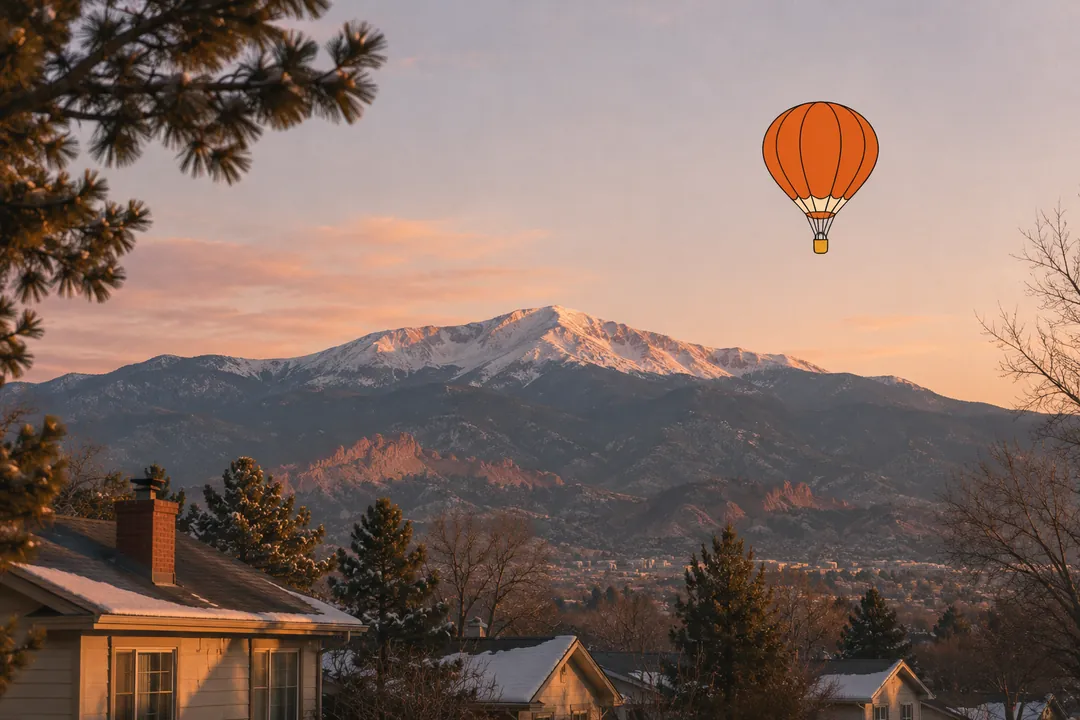
Blendpipe’s office is at 1915 Aerotech Drive, Suite 100A, Colorado Springs, CO 80916. Meetings there are by appointment. Most collaboration with clients happens remotely, and shoots happen on location wherever each production plan puts them. This page covers the office, the permit rules for filming around Colorado Springs, the basics of Colorado’s film incentive, planning for Front Range weather, and how clients elsewhere in the US work with the studio.
The office
To arrange a meeting, write to hello@blendpipe.com with the topic and a few dates that suit you. Briefs and estimate questions go to sales@blendpipe.com, and files, delivery and rights paperwork to support@blendpipe.com. A meeting is never required: every stage of a project, from the brief to the handover, can run by email and review links.
Filming permits around Colorado Springs
Who issues a permit depends on where the camera stands. The rules below are from the Visit Colorado Springs film permits page, read on November 22, 2026. The city’s own permit pages could not be read that day, and fees and rules change, so every location in a plan is confirmed with the permitting office before the shoot date is set.
| Where | What the source says |
|---|---|
| City parks, trails and open spaces | A Commercial Film Permit Application is required: $25 application fee, $250 per day, apply 14 days in advance, $1,000,000 certificate of insurance naming the city |
| Garden of the Gods | $500 per day, with restricted hours |
| Drones in city parks | “Drone filming permits are not currently available” |
| Private property | No City or County permit required; the owner’s permission is needed |
| City streets | No permit needed when filming does not impede traffic |
| Pikes Peak highway | From $2,000 per day; about 6 months’ lead time is ideal |
| El Paso County parks | $100 per permit per day |
| Manitou Incline and Red Rock Open Space | Filming there “is currently not permitted” |
What this means for a production plan
- Lead time goes in the schedule. A city park permit needs 14 days, and the Pikes Peak highway ideally about six months. The plan puts each application ahead of the shoot week with its own date, so a late permit shows up as a schedule risk before anyone books a crew.
- Insurance is named. A city park permit needs a $1,000,000 certificate of insurance naming the city. The plan says who provides it.
- No drone shots in city parks. While drone permits there are unavailable, a plan that needs height over a park uses another route: a high vantage point on private land with the owner’s permission, a 3D environment, or a drawn element over live-action plates.
- Private land needs paperwork. The owner’s written permission and a location release go on the rights sheet with the rest of the rights and usage records.
- Closed places stay off the list. The Manitou Incline and Red Rock Open Space are not scouted for filming while filming there is not permitted.
The pre-production checklist includes permits, insurance certificates and location releases, so you can check a plan against it.
Example (fictional). The Orlenna plan books one shoot day in week 4 on a permitted trail location. If that trail is in a Colorado Springs city park, the permit application goes in by the end of week 2, at least 14 days ahead, with the insurance certificate attached. The opening shot, a runner on a ridge at dawn, is planned from the ground rather than from a drone, and the power line that crosses the sky is removed later by an AI-assisted cleanup that a compositor reviews frame by frame. Orlenna is an invented brand, not a client.
Colorado’s film incentive
Colorado’s film incentive was reworked by HB24-1358, signed May 28, 2024. The bill says the credit “must not exceed 22%” of expenditures, sets a minimum of $100,000 in expenditures and a $5 million annual cap, and uses a reservation system that a production applies to “before commencing production activities”. The program is repealed January 1, 2032.
The state film office’s own pages could not be read when this page was checked on November 22, 2026, so the current program terms, and whether different thresholds apply to commercials, were not confirmed. Confirm the current terms with the state film office before relying on any of these figures.
Blendpipe makes no claim that any project qualifies. When a brief includes a Colorado shoot with spending on that scale, the production plan lists the incentive as a question to raise with the state film office early, because the reservation has to come before production activities begin. Whether to apply is the client’s decision, made with its own accountant and counsel.
Weather and seasons on the Front Range
Colorado Springs is a high-elevation city at the foot of Pikes Peak, and the weather can change quickly. A few general patterns shape how a shoot is planned here:
- Light. The sun is strong and the air is often dry and clear, so midday light is hard. Dawn and late afternoon are the usual windows for exterior work, and call times are set around them.
- Summer storms. Afternoon thunderstorms are common in summer, often building over the mountains after midday. Morning calls reduce the risk, and exposed ridges are cleared when lightning is near.
- Snow and cold. Snow can fall from autumn into spring, and on high ground in almost any month. A forecast for the city says little about conditions on a summit, and roads to high places can close for weather.
- Temperature swings. Mornings and afternoons can differ widely, which matters for talent comfort, wardrobe continuity and batteries.
- Altitude. Crew and talent arriving from low elevations may need time to adjust, so long days at height are paced, with water and breaks built into the schedule.
The production plan carries a weather alternative for every exterior day: a hold date, a covered or interior setup, or a change in how a shot is made. A 3D packshot or a drawn transition does not depend on the sky, so if weather takes a shot away, the blend map already shows which seconds could move to another medium and what that would change in the estimate.
Working with clients anywhere in the US
Blendpipe serves brands, ad agencies and in-house teams across the US, and most projects run remotely. The brief arrives by email or through the contact page, and the production plan comes back in writing. Reviews happen at the points set in the schedule, through review links, with the approvers named in the plan. Shoots happen in Colorado or wherever the plan requires, and files are delivered digitally, named to the deliverable matrix. See how we work for the seven stages from Brief to Hand over, and the industry pages for outdoor and recreation and aerospace and defense for Colorado context.
Planning a shoot in Colorado, or a campaign that needs no shoot at all? Send a brief with the placements, the deadline and any locations you have in mind, and the plan will show what each location needs before a date is set.