Concept, script, storyboards and previs
Concept, script, boards, style frames, animatic and previs, signed off before anything is shot or rendered.
Send a brief- You send
- Objectives, mandatories, claims review contacts
- You get first
- Treatment and a script with a timed read
- Then
- Boards, style frames, animatic or previs
- Decided here
- The confirmed blend map for every shot
Shot 1, 0:00 to 0:04
Ridge at dawn
- Live action
- AI-assisted
A runner crests a frosted ridge as the sun clears the horizon.
Why this medium: Only a real location sells cold air and early light. An AI-assisted cleanup removes a power line from the sky; a compositor reviews every frame.
Shot 2, 0:04 to 0:07
First sip
- Live action
- Animation
At the trailhead the runner pours coffee; a drawn line rises out of the steam.
Why this medium: The animated line is the idea of the spot (heat that lasts), so it starts inside a real moment.
Shot 3, 0:07 to 0:12
The line becomes a chart
- Animation
The line stretches across the frame into a simple temperature curve from 6 a.m. to noon.
Why this medium: A chart is clearer drawn than filmed, and it can be retimed for every cutdown.
Shot 4, 0:12 to 0:17
Inside the wall
- 3D
The bottle separates into its layers: outer steel, vacuum gap, copper lining, inner steel.
Why this medium: A camera cannot show a vacuum gap. A 3D model built from the product drawings can, accurately.
Shot 5, 0:17 to 0:20
Back on the trail
- Live action
- 3D
- Animation
- AI-assisted
The 3D bottle sits in the runner’s real hand; the drawn line wraps around it.
Why this medium: The blended shot joins the three media. AI-assisted rotoscoping speeds the hand matte; a person finishes the edges.
Shot 6, 0:20 to 0:24
Summit pour
- Live action
At the top, the runner pours and the steam is still there.
Why this medium: The proof moment stays real: the same coffee, the same bottle, filmed hours later.
Shot 7, 0:24 to 0:27
Twelve hours
- Animation
Kinetic type: twelve hours hot, twenty-four cold.
Why this medium: Type animates cleanly in every aspect ratio and language version.
Shot 8, 0:27 to 0:30
Packshot
- 3D
The bottle turns once and settles on the end card.
Why this medium: A rendered packshot is identical in every version and can be re-rendered for a new color.
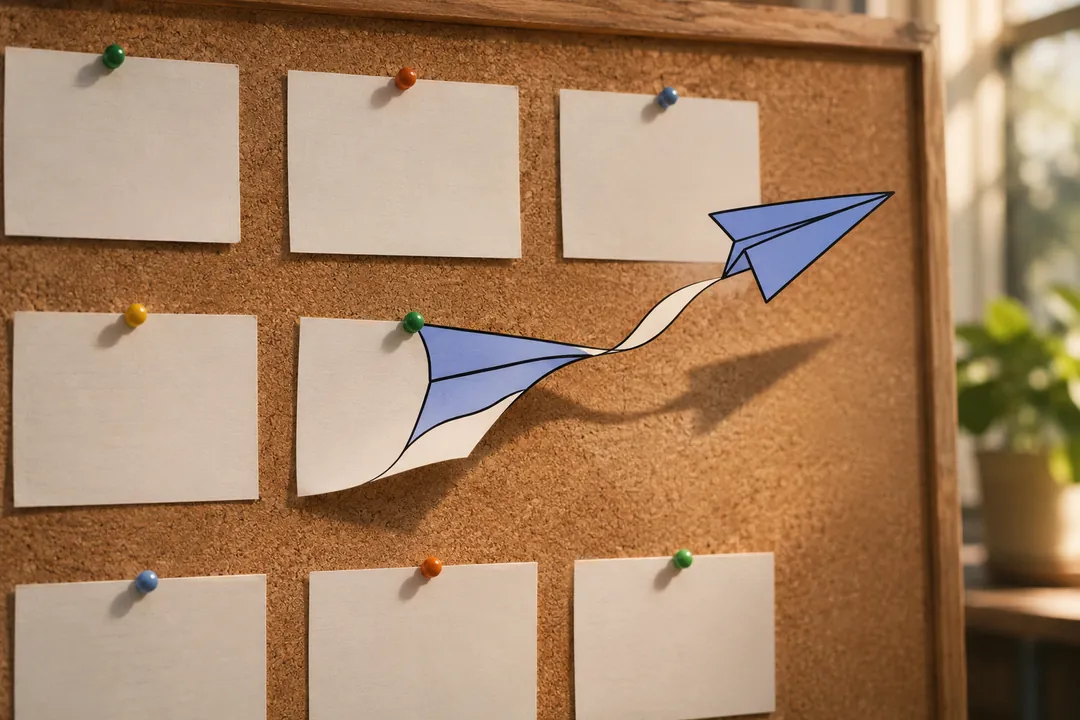
Creative development is where an ad is cheapest to change. A script line, a camera move or the choice between filming a moment and rendering it takes minutes to revise on paper, and days once a crew is booked or a render is running. Blendpipe uses the Develop stage to turn the production plan into material everyone can see and sign off: a script timed to the spot, storyboards, style frames, an animatic and, where a shot is hard to picture, previs.
The blend map above shows the whole fictional Orlenna spot as it stands at the end of development: 8 shots across 30 seconds, each assigned to live action, 3D, 2D animation or an AI-assisted step, with the reason written beside it. The map is drafted in the production plan and confirmed here, against the boards and the animatic, before any shoot day or render is committed. In the example, development takes weeks 2 and 3 of an 8-week schedule.
What creative development covers
Concept and treatment
The concept answers the brief with one idea. The treatment describes it in words and reference frames: tone, look, structure, and how the media will combine. A good treatment already explains why a shot is filmed rather than drawn, so the blend map reads as a consequence of the idea rather than a list of techniques.
Script and voiceover draft
The script is written to the spot length, with every spoken word counted. At 150 words per minute the 42-word Orlenna voiceover reads in 16.8 seconds; with 6 seconds of music-only moments that is 22.8 seconds, leaving 7.2 seconds for the packshot and room to breathe. The script timing calculator runs the same check on your script. Claims are matched to the evidence the brand holds, and your legal or claims reviewer sees the script at this stage, not after the edit.
Storyboards
One frame per shot or key moment, with the action, camera, duration and medium written beneath it. Boards are where the blend map becomes visible: a board for a live-action shot shows what the camera has to capture, and a board for a blended shot shows which layer sits where.
Style frames
Finished stills that fix the look of the animated and 3D shots: line, color, materials, lighting and type. Two to four style frames usually set a look. Each is signed off before animation or rendering begins, because every later frame follows it. See 2D animation and 3D and CGI.
Animatic
The boards cut to time with a scratch voiceover and temporary music. The animatic is the first time the spot plays at its real length, and the cheapest place to learn that a shot runs long, a line is too fast or the end card arrives too late.
Previs
A rough moving version of a shot, built in simple 3D or with AI-assisted tools, used to plan camera moves, lens choice and timing before a shoot or a render. Previs is a planning document: it is replaced by the real shot and never delivered as part of the ad.
Example (fictional). For Orlenna, weeks 2 and 3 produce a script with the 42-word voiceover, eight boards, style frames for the drawn line and the 3D bottle, an animatic cut to a scratch read, and AI-assisted previs of the ridge at dawn (shot 1, 0 to 4 seconds) so the shoot plan knows the angle and the light it needs. The animatic is also where the 5 seconds given to the chart in shot 3 (7 to 12 seconds) are tested against the voiceover, before anyone animates the curve.
AI-assisted concept frames, labeled in the plan
AI-assisted image tools can produce reference frames quickly during concept and treatment: a mood, a lighting idea, a composition to react to. Blendpipe may use them there, under three rules:
- Labeled. Every AI-assisted frame is marked as such inside the plan and the treatment, and listed in the provenance log with the tool category and the person who reviewed it.
- Reference, not artwork. AI-assisted concept frames are not final artwork and are not presented as owned outright. Final style frames, boards and key designs are drawn, built or photographed by people.
- No likeness without consent. No concept frame shows a real person’s face, body or voice without that person’s written consent.
This matters for ownership. The US Copyright Office says registration applicants have a duty to disclose AI-generated content, that AI material which is more than de minimis should be explicitly excluded, and that human selection, arrangement or modification can be protected, but only the human-authored aspects. Its 2025 report adds that prompts alone do not give enough control for authorship. Keeping concept frames labeled and out of the final artwork keeps a clear record of which parts are human-authored, which your counsel will want if the campaign is registered. The full policy is on AI practices.
Review points and sign-off
Each document in development has a named approver and a review date in the schedule: the treatment and script first, then boards and style frames, then the animatic or previs. Feedback is collected once per round from everyone who signs off, so notes arrive together instead of one at a time after a stage has closed. The stages and their order are on how we work.
What you send and what you get
You send the objectives, the audience, the mandatories (logo rules, product names, legal lines, the end card), the claims with the evidence behind them, and the names of the people who review legal and claims questions. The creative brief worksheet lists the questions in one sheet.
You receive the treatment, the script with a timed read, storyboards, style frames, the animatic or previs, and the confirmed blend map. The shot list worksheet uses the same columns as the blend map (shot, in to out, what we see, medium, why), so you can draft your own version before the first call.
Want an idea tested on paper before production is committed? Send a brief with the objective, the placements and the deadline, and the first thing you receive is the production plan.