Ads for outdoor and recreation brands
Real trails and real light, with the product rendered where a camera cannot show it.
See the example campaign- You send
- Product drawings or CAD, samples, placements
- You get first
- A production plan with locations and weather holds
- Delivered
- Hero spot, cutdowns, stills, rights sheet
- Often uses
- Trail live action, 3D product, drawn graphics
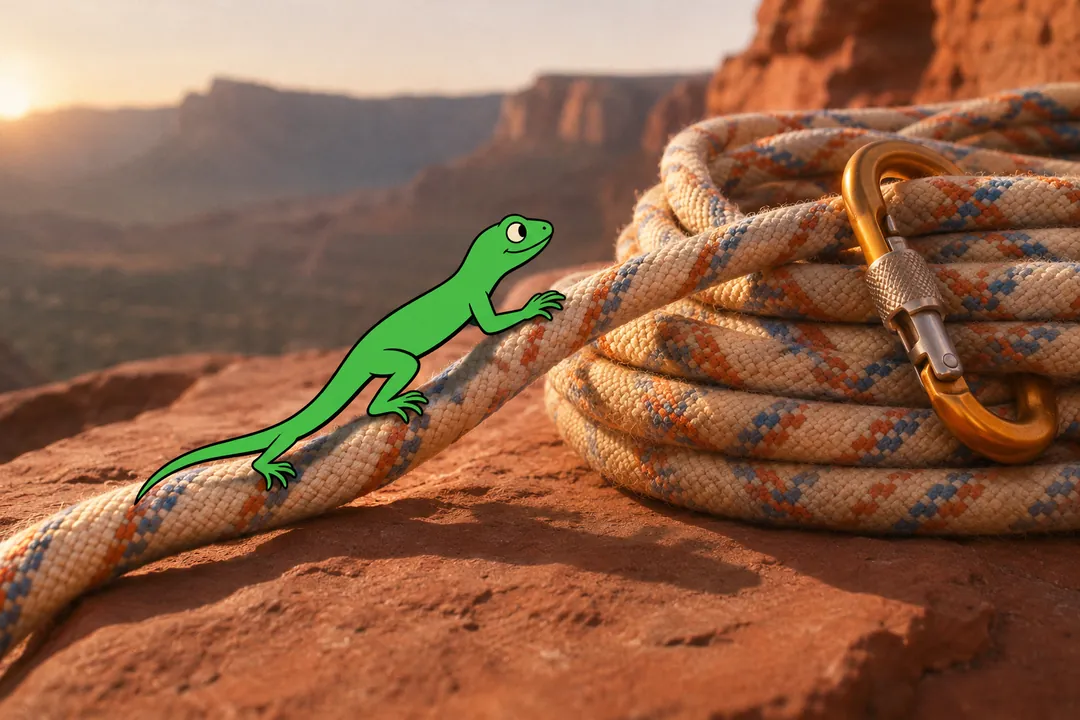
Outdoor ads sell a place and a feeling that are hard to fake: cold air at dawn, real rock, breath in low light. They also have to show the product closely: a vacuum wall, a taped seam, a buckle that works with gloves on. Blendpipe plans outdoor work as live action for the place and the people, 3D for the product’s inside and its packshot, and drawn graphics for the facts. Shoots happen on location wherever the plan requires, for clients anywhere in the US.
What we make for outdoor brands
Trail and backcountry live action
Live action carries what the audience should trust as real: the trail, the weather, the effort. Shots that will carry a 3D product or drawn elements are filmed as plates, with tracking markers, a clean pass and a light reference so the render can match the sun. Talent, location owners and anyone recognizable sign releases whose terms go into the rights sheet. See live action.
Product 3D
A 3D model built from the product drawings shows the layers of a wall, the baffles in a jacket or the mechanism in a binding, and it renders the packshot identically in every version. A new colorway is a material change and a re-render, not a second shoot. See 3D and CGI.
Blended shots
A real hand on a real trail holding a rendered product, with a drawn line or callout around it. These shots are the core of mixed-media work, and they are planned before the shoot, because the plate decides whether the composite works.
Permits and places around Colorado Springs
Permit rules decide which shots are possible before the creative does. As listed by Visit Colorado Springs on its film permits page (checked November 22, 2026):
| Place | What the page says |
|---|---|
| Private property | No city or county permit needed; the owner’s permission is |
| City streets, without impeding traffic | No permit needed |
| City parks, trails and open spaces | Commercial Film Permit Application, $25 application fee, $250 per day, apply 14 days ahead, $1,000,000 certificate of insurance naming the city |
| Garden of the Gods | $500 per day, with restricted hours |
| Drones in city parks | Drone filming permits are not currently available |
| Manitou Incline and Red Rock Open Space | Filming is currently not permitted |
| Pikes Peak Highway | From $2,000 per day, with about 6 months’ lead time ideal |
| El Paso County parks | $100 per permit per day |
So the plan does not put a drone shot in a city park or any shot on the Manitou Incline or in Red Rock Open Space. Where an aerial view matters, the blend map looks for another route: a location where flight is allowed, flown by a certificated remote pilot, or a 3D or drawn treatment. Other land managers, such as national forests and state parks, set their own rules, so the plan lists the permit, fee and lead time for every location. The local picture, including the state film office, is on Colorado Springs.
Weather in the schedule
Mountain weather does not keep a schedule, so the plan treats it as a scheduled risk:
- A named hold date for each outdoor shoot day, with the conditions that trigger it (wind, lightning, snow on the access road, smoke) and the time the call is made.
- The cost of moving, from the crew, rental and location terms, shown in the estimate’s contingency.
- A cover set that can be shot if the trail is out, usually product tabletop or plates that do not depend on the sky.
- A ranked shot list, so the shots that only work at dawn are first and the rest can move.
The 3D and animation work does not depend on the weather, so it keeps moving while a shoot waits. The pre-production checklist includes the permit, insurance and backup plan items.
Example (fictional). Orlenna is an invented Colorado outdoor brand, not a client, and its Ridge Bottle is not a real product; every figure is an illustration. The 30-second hero spot at 24 fps has 8 shots. Live action carries 14 seconds (the ridge at dawn, the first sip, the blended trail shot and the summit pour), 3D carries 11 seconds (an exploded view of outer steel, vacuum gap, copper lining and inner steel, the blended shot and the packshot), and 2D animation carries 14 seconds; a shot can use several media. Shot 1 uses an AI-assisted cleanup to remove a power line from the sky, reviewed frame by frame. The schedule runs 8 weeks, with one shoot day and the 3D model both in week 4. The full plan, with the blend map, the 24-deliverable matrix and the schedule, is on the example campaign page.
What you provide and what you receive
You provide:
- product drawings or CAD for the 3D model, and samples or non-working props for the shoot
- the season, the look and the places you have in mind
- athlete or ambassador agreements, so their usage terms can be checked
- the placements, the deadline, a budget range and your brand guidelines
You receive:
- the production plan first, including the location list with permit status and the weather hold plan
- the shoot plan and call sheet summary, plus storyboards and style frames
- the hero spot, cutdowns and stills named to the matrix, with caption files
- the rights sheet with talent, location and music terms, and the provenance log
Services and tools that apply
Outdoor launches usually combine live action, 3D and CGI and mixed media, with AI-assisted production limited to steps like cleanup and rotoscoping that a person reviews. Campaign versioning adapts the hero for each feed.
The shot list worksheet lays out shots with their medium and reason. Many talent agreements count use in 13-week cycles; the usage term calculator turns a first use date into cycle and renewal dates.
Planning a season launch? Read the fictional example campaign, then send a brief with the product and the placements.